
Coming of Age
A recurring idea that shapes Little Women.
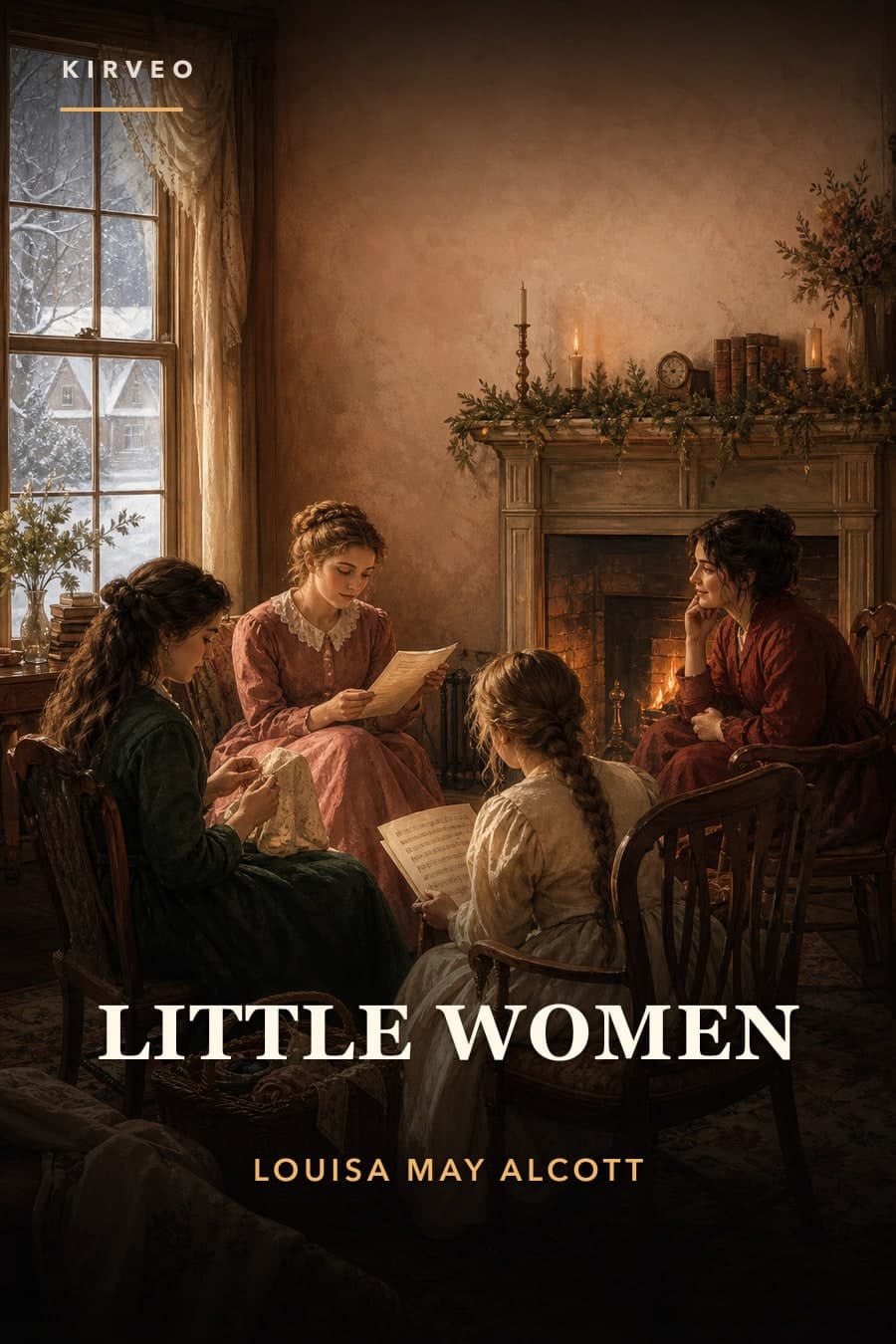
The four March sisters grow through work, art, affection, disappointment, and changing ideas of home during and after the American Civil War.
The four March sisters grow through work, art, affection, disappointment, and changing ideas of home during and after the American Civil War.
The author of Little Women.
Explore author profileThis work develops its ideas directly rather than through a character-led narrative.
Little Women belongs to the literary and cultural world of Public-domain literature.
The four March sisters grow through work, art, affection, disappointment, and changing ideas of home during and after the American Civil War.
Begin by following how coming of age and family shape the work’s central choices.
Little Women follows the four March sisters—Meg, Jo, Beth, and Amy—and their mother during and after the American Civil War while their father is away. The story depicts their everyday struggles, moral lessons from their mother, and their growth through work, art, affection, and disappointment, culminating in Jo running a school at Plumfield.
The main characters are the four March sisters: Meg (the eldest, concerned with propriety), Jo (the tomboyish aspiring writer), Beth (the shy and gentle one), and Amy (the artistic and image-conscious youngest). Their mother, Marmee, is a central figure, along with neighbor Mr. Laurence and his grandson Laurie. Later, Professor Bhaer becomes Jo's husband.
The reading difficulty is rated intermediate. The language is 1868 American English but generally clear, with short chapters and dialogue-driven narrative. Themes include duty, modesty, and care. It is a public domain classic often recommended for ages 10 and up, though some period phrasing may require explanation.
Major themes include moral self-improvement (the 'Playing Pilgrims' metaphor), family resilience during hardship, the transition from childhood play to adult responsibility, and the balance between duty and personal ambition. The metadata categorizes it as Coming of Age, Family, and Classic Literature.
The story is set during and after the American Civil War, though the war is not explicitly named. It reflects 19th-century American domestic and social norms, including gendered expectations, family-centered Christmas observances, and the impact of war on households. The father is away 'where the fighting was,' implying the Civil War backdrop.
Source and editorial notice
Public-domain source information is preserved with the published edition. This reading guide was created with AI assistance and reviewed before publication.