
Psychological Fiction
A recurring idea that shapes Rashomon.
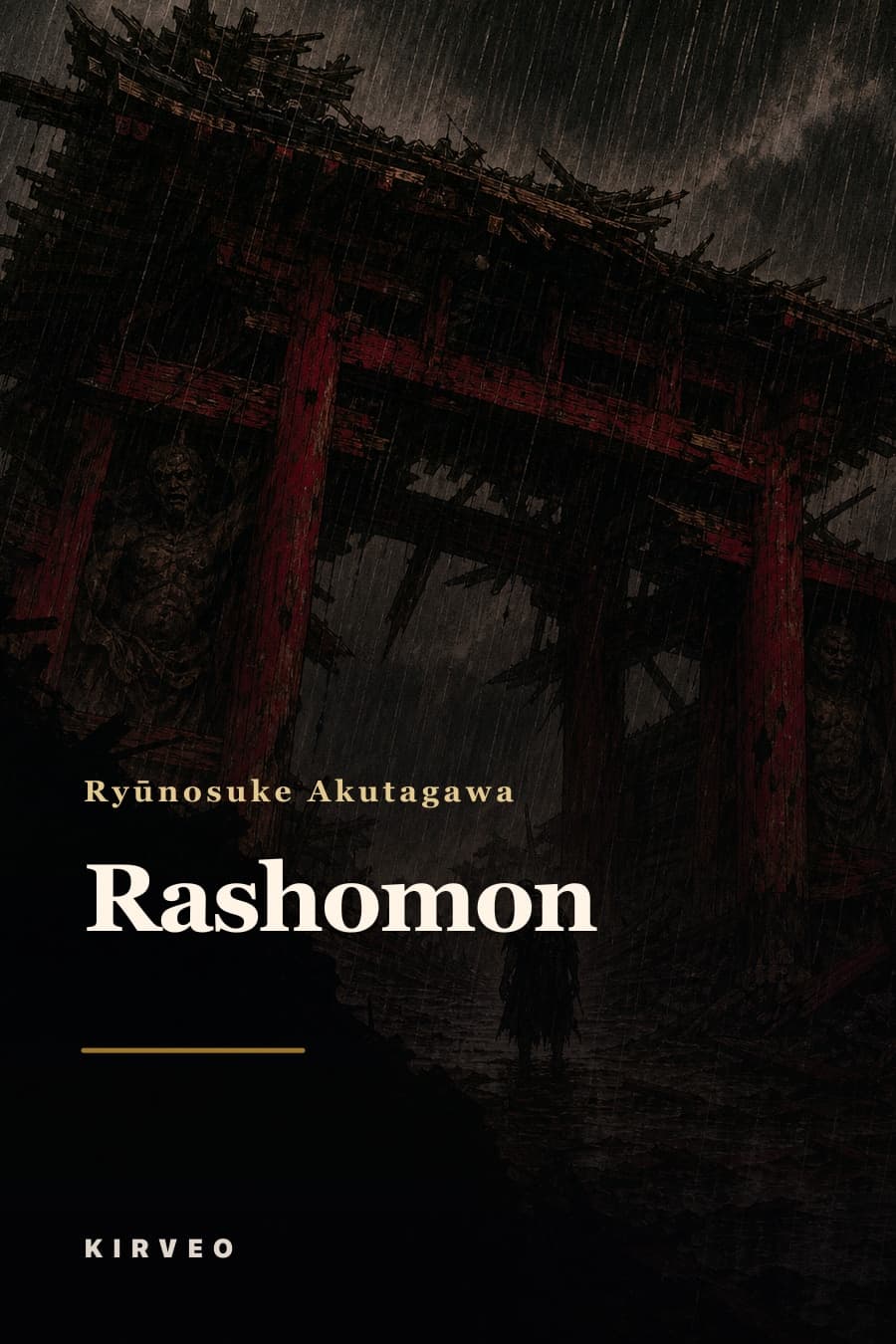
In famine-struck Kyoto, a dismissed servant shelters at the ruined Rashomon gate. He finds an old woman stealing hair from corpses and, after hearing her starvation defense, robs her and turns to crime. A bleak tale of survival eroding morality.
A servant dismissed by his master waits under Rashomon gate in Kyoto as rain falls; the city is ruined by recent disasters and the gate has become a dump for unclaimed dead. With no home and no plan, he weighs starving versus stealing. He climbs to the gate's upper floor seeking shelter and finds corpses and an old woman pulling hair from a female corpse to make a wig. He initially feels outrage and subdues her, demanding explanation. The woman says the dead sold fake dried fish (snake) to soldiers and that starvation forced both her act and the corpse's earlier deceit; she claims the dead would understand. The servant, hearing this, finds courage to abandon starvation as an option and robs the old woman of her clothing, then descends and goes into Kyoto to commit robbery. The old woman later crawls to the stair edge; only darkness below. (Spoilers withheld per option: no further detail.)
The author of Rashomon.
Explore author profileThis work develops its ideas directly rather than through a character-led narrative.
Rashomon belongs to the literary and cultural world of Public-domain literature.
A servant dismissed by his master waits under Rashomon gate in Kyoto as rain falls; the city is ruined by recent disasters and the gate has become a dump for unclaimed dead. With no home and no plan, he weighs starving versus stealing. He climbs to the gate's upper floor seeking shelter and finds corpses and an old woman pulling hair from a female corpse to make a wig. He initially feels outrage and subdues her, demanding explanation. The woman says the dead sold fake dried fish (snake) to soldiers and that starvation forced both her act and the corpse's earlier deceit; she claims the dead would understand. The servant, hearing this, finds courage to abandon starvation as an option and robs the old woman of her clothing, then descends and goes into Kyoto to commit robbery. The old woman later crawls to the stair edge; only darkness below. (Spoilers withheld per option: no further detail.)
Begin by following how psychological fiction and historical fiction shape the work’s central choices.
Source and editorial notice
Public-domain source information is preserved with the published edition. This reading guide was created with AI assistance and reviewed before publication.