
Adventure
A recurring idea that shapes The Count of Monte Cristo.
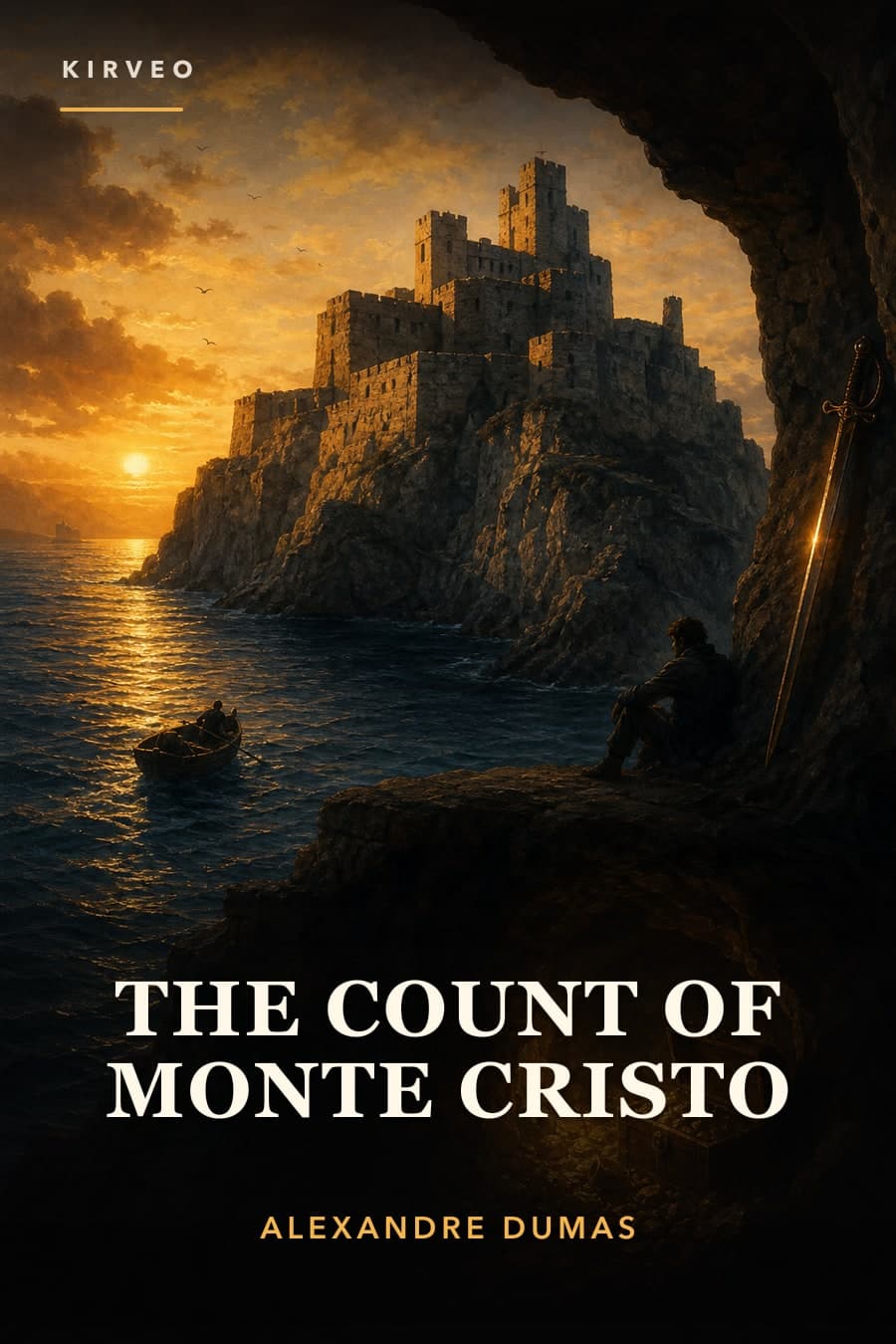
Wrongfully imprisoned, Edmond Dantès returns with wealth and a new identity to test the boundaries between justice, vengeance, and mercy.
Wrongfully imprisoned, Edmond Dantès returns with wealth and a new identity to test the boundaries between justice, vengeance, and mercy.
The author of The Count of Monte Cristo.
Explore author profileThis work develops its ideas directly rather than through a character-led narrative.
The Count of Monte Cristo belongs to the literary and cultural world of Public-domain literature.
Wrongfully imprisoned, Edmond Dantès returns with wealth and a new identity to test the boundaries between justice, vengeance, and mercy.
Begin by following how adventure and historical fiction shape the work’s central choices.
The novel begins in 1815 Marseille under the Napoleonic period, then moves to Paris and Mediterranean locales during the Restoration and July Monarchy. Edmond Dantès arrives in Marseille in 1815 (Ch.1) and is later imprisoned at Château d'If. After escaping, he reappears in Parisian high society. The historical backdrop includes Napoleonic politics and Restoration social dynamics.
The main protagonist is Edmond Dantès, a young Marseille sailor who is wrongfully imprisoned in 1815. In prison, he befriends Abbé Faria, who dies; Dantès escapes by taking Faria's place in a burial sack. Years later, he reappears as the wealthy Count of Monte-Cristo, using his fortune to enact revenge on those who betrayed him.
The full novel has 117 chapters. This is noted in the reading guide and the difficulty assessment, which mentions the structure of 117 chapters spanning many subplots across years.
The reading difficulty is classified as intermediate. This is due to the 19th-century translation and period vocabulary, the length of 117 chapters with many subplots, the historical background of Napoleonic and Restoration France, and the philosophical depth involving justice and fate. Narrative density arises from a large cast, letters, and disguises.
Source and editorial notice
Public-domain source information is preserved with the published edition. This reading guide was created with AI assistance and reviewed before publication.